
The UAE Fire Code is evolving—bringing greater clarity and much-needed relief to stakeholders
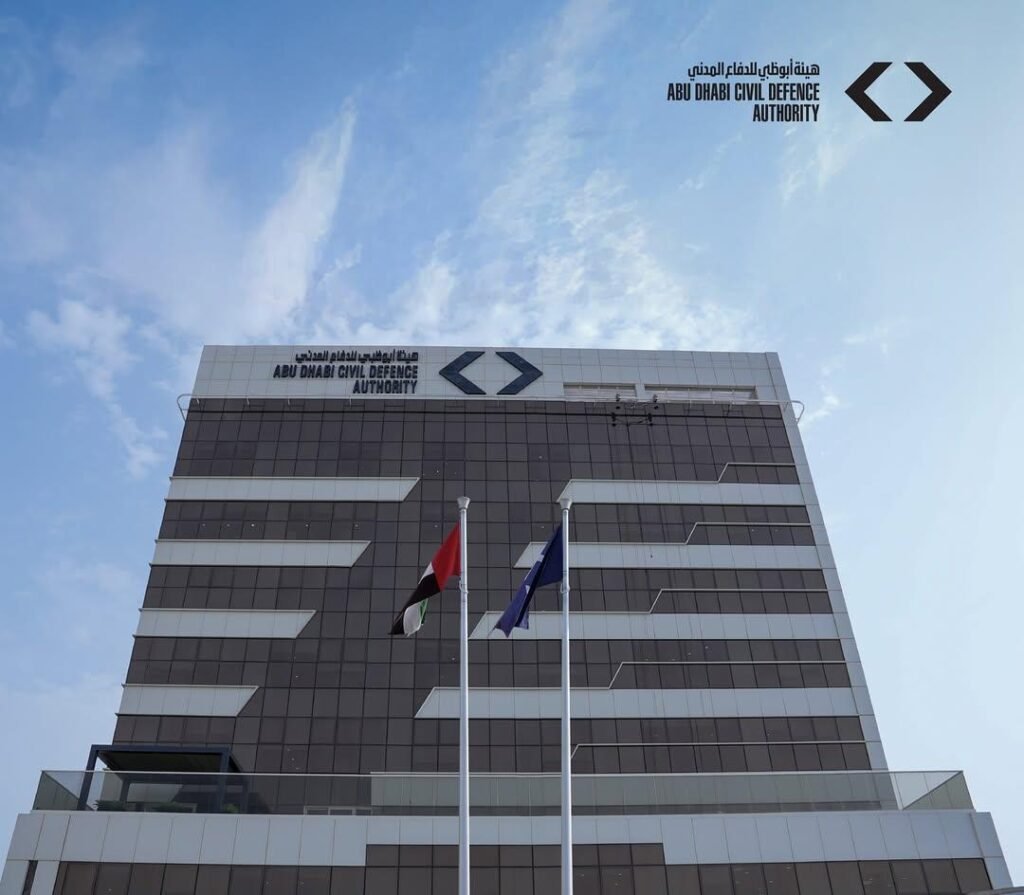
Recent amendments to the UAE Fire and Life Safety Code of Practice (2018 Edition) represent a meaningful shift in how fire safety is interpreted, applied, and enforced across the region. With 54 formalized updates introduced by Abu Dhabi Civil Defense Authority (ADCDA), many previously case-by-case decisions are now standardized—bringing greater clarity, consistency, and practicality to compliance.
What’s Changing: Key Industry Impacts
Several amendments focus on improving flexibility, aligning with international standards, and addressing real-world project challenges. A few examples include:
- Greater reliance on international codes for gaps and existing buildings, with NFPA references adopted for areas such as industrial classification and existing building compliance (Decision 23)
- Simplified requirements for existing buildings and extensions, with systems applied only where necessary, such as limiting sprinklers to newly added floors (Decision 12-13)
- Increased flexibility through authority-approved alternative approaches, allowing design decisions such as locating landing valves in corridors or staircases based on project conditions (Decision 21)
- Flexibility in fire protection infrastructure, including acceptance of mobile fire pumps in place of fixed installations subject to Civil Defence approval (Decision 29)
- Refined Civil Defense access requirements aligned with practical site conditions, including updated fire truck access, turning radii, & road width provisions (Decision 15)
- Relaxation of ventilation requirements for certain occupancies, such as exemptions from mechanical ventilation/smoke management in low-rise school buildings (Decision 20)
- Expanded use of natural ventilation strategies, permitting louver-based ventilation in pump rooms, generator rooms, and control spaces (Decision 32)
- More practical provisions for ancillary spaces, such as limiting external substations to portable extinguishers and allowing waste rooms at lower levels with conditions (Decisions 24, 33)
- Revised requirements for specialized occupancies, including reduced system expectations for villa conversions and exemptions for smaller agricultural buildings (Decisions 46, 17)
- Greater reliance on Civil Defence approvals and documented undertakings for non-standard applications.
A Reminder to the Industry
For developers, architects, consultants, contractors, façade specialists, MEP teams, and facility stakeholders, one truth remains: fire code compliance is not a final-stage exercise. It must be embedded from the outset.
Why These Amendments Matter
As projects grow in scale and complexity, Fire and Life Safety cannot be treated as a checklist addressed only during submissions or inspections.
These updates directly influence decisions across:
- Concept and design development
- Material selection and system specification
- Construction execution
- Authority coordination
- Handover and operational readiness
In practice, most compliance failures do not originate at inspection—they begin much earlier, during design, procurement, or site execution. The impact is not only technical, it is strategic.
Misalignment with code requirements can lead to:
- Design rework
- Approval delays
- Costly corrective measures
- Coordination conflicts
- System incompatibility
- Delayed handover and/or occupancy
This is why fire code awareness must extend across the entire project ecosystem, not sit within a single discipline.
A Stronger Code Requires Stronger Application
The value of a code lies not in its publication, but in its application. These are interconnected decisions that ultimately determine how effectively safety and compliance are achieved in practice.
What the Industry Should Do Now
Rather than reacting to non-compliances, stakeholders should use this moment to strengthen internal readiness:
- Integrate Fire and Life Safety early into project workflows
- Align teams with current authority expectations
- Engage a Fire Consultant/House of Expertise from the outset
- Identify risks early, before they manifest on site
- Treat compliance as a proactive strategy, not a corrective measure
This approach does not just support approvals: it delivers better projects.
Butler Engineering’s View
At Butler Engineering, we welcome every step that enhances clarity, consistency, and accountability within the UAE’s Fire and Life Safety landscape.
Across our work in Fire and Life Safety, Façade & Firestop Evaluation & Approval, Risk Assessments, Emergency Response & Evacuation Planning, and Fire Safety Audits, we consistently see the impact of early technical alignment on project success.
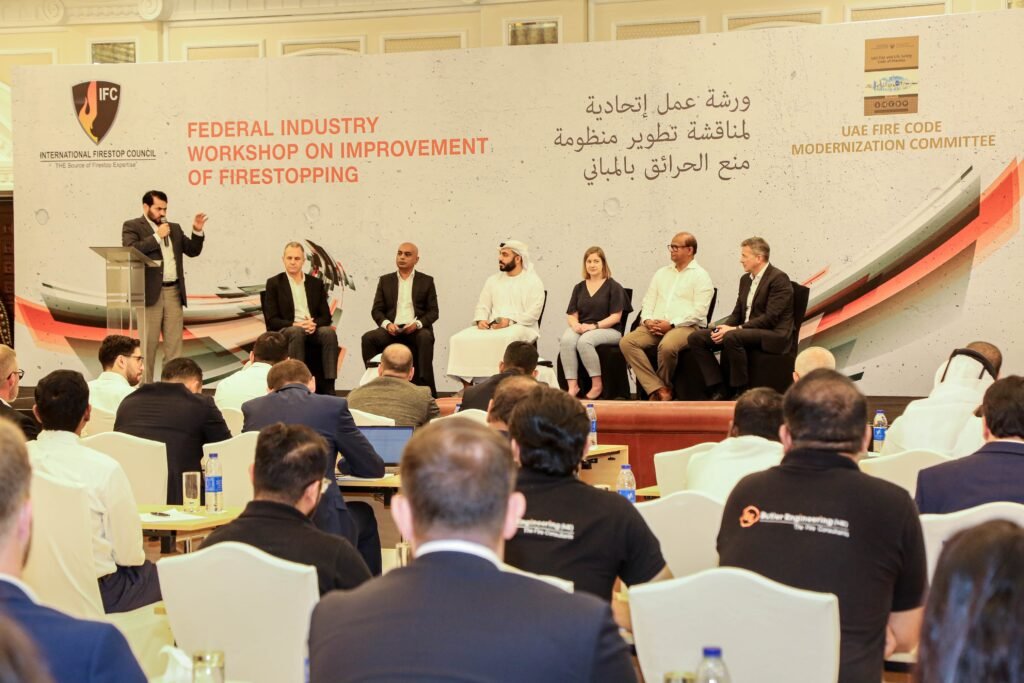
Our CEO, Sajid Raza, who serves on the UAE Fire Code Committee and has contributed to the development of the opening chapters of the UAE Fire and Life Safety Code of Practice, has long advocated for practical code application, independent review, and technical diligence: not just to meet requirements, but to ensure real-world performance. Because Fire and Life Safety is not only about compliance: it is about protecting people, property, business continuity, and long-term trust in the built environment.
Stay Ahead of Code, Not Behind It: How Butler Engineering Supports Your Project
At Butler Engineering, we work closely with project teams from the earliest stages—including pre-concept and concept design—to translate evolving code requirements into clear, practical, and compliant strategies. Our focus goes beyond meeting requirements, ensuring fire and life safety is effectively integrated across design, construction, and operation.
We support our clients through:
- Fire and Life Safety Design and Strategy Report preparation and review, aligned with UAE Fire and Life Safety Code requirements
- Fire Protection System design and drawing review services
- Façade and firestop system evaluation, inspection, and submission for Civil Defense approval
- Construction supervision and site inspections
- Fire risk assessments and post-construction building fire safety audits
- Code compliance assessments, technical justifications, and Civil Defense coordination
- Evacuation and emergency response planning
Engage Early, Delivery Better
If you are working on a project in the UAE or reassessing an existing asset, now is the time to align your fire and life safety approach with the latest code developments, reducing risk, improving coordination, and enabling smoother approvals. Connect with Butler Engineering to understand how these amendments may impact your project and how best to respond.
Email: info@butlerme.com | Tel: +971 4 39 22 001
Closing Thought
As the regulatory environment evolves, the industry must evolve with it. And in Fire and Life Safety, the projects that perform best are always the ones that are prepared the earliest.
Read the official circular from the Abu Dhabi Civil Defense Authority here